

 Xano
XanoPrerequisites
- Node.js 18 or later
- VS Code with the GitHub Copilot and GitHub Copilot Chat extensions installed
- An active GitHub Copilot subscription
Installation
1. Install the MCP Server
Method 1: Click to install Method 2: Manual install- Open the Command Palette by pressing ⌘ / Ctrl + Shift + P and type MCP. Click MCP: Add Server
- Choose Command (stdio) and provide the command
npx -y @xano/developer-mcp - Give the server a name, such as Xano Developer MCP
- Choose whether to enable the MCP in the open workspace only, or for the entire profile
2. Install the XanoScript Language Server extension
The Language Server extension is required for the best AI-assisted XanoScript experience — it provides code completion, syntax highlighting, and inline diagnostics that every AI tool on this page (Copilot, Claude Code, Codex, Gemini CLI) reads from. Install it from the VS Code Marketplace.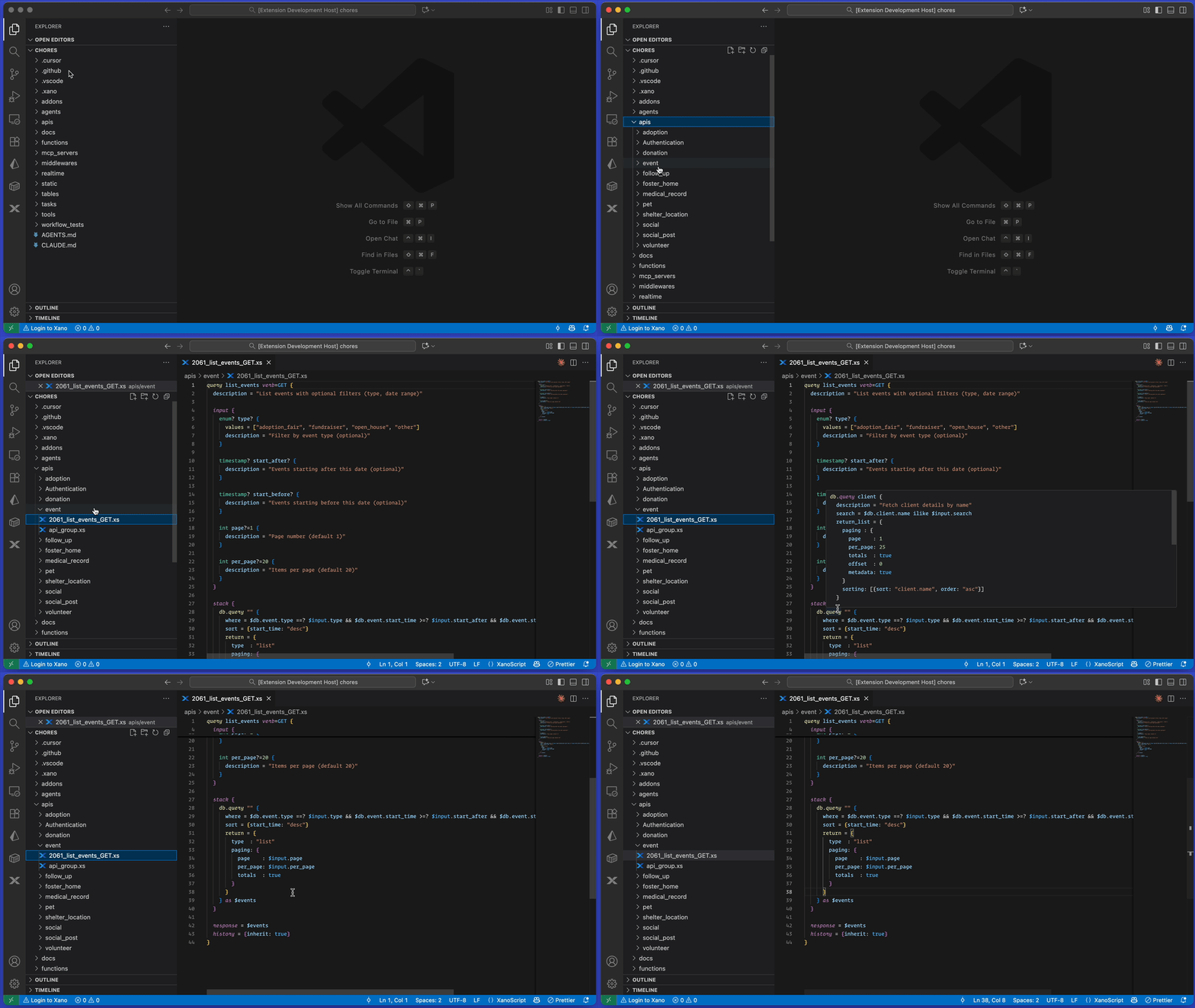
3. Verify Setup
In Copilot Chat, ask:“What version of the Xano Developer MCP is installed?”Copilot should call
mcp_version and return the current version number.

Using Copilot
The Developer MCP lets Copilot write and validate XanoScript using your local Xano workspace as context. Before asking Copilot to make changes, pull a workspace locally with the Xano CLI. If you haven’t installed and authenticated with the CLI yet, do that now before continuing. Then select or create a workspace and run:xano sandbox review opens your sandbox in the browser — verify everything looks right, then promote the changes to production from there.
Using Claude Code, Gemini, Codex, or another CLI
Prefer a CLI agent over Copilot? Each of these runs in VS Code’s integrated terminal (View → Terminal). Setup is identical to the standalone install — the sections below cover the quick install plus VS Code-specific quirks. Full guides for each agent are linked at the end of every section.
Install the XanoScript Language Server extension (Step 2 above) before continuing. Every CLI agent on this page depends on it for inline syntax help and diagnostics — don’t skip it.
Claude Code
In the integrated terminal: Add Claude Code
--scope user to make the server available across every project rather than just the open workspace.
→ Full guide: Claude Code
Codex
Install Codex if you don’t already have it, then add the MCP — both run in the integrated terminal: → Full guide: Codex
 Codex
CodexGemini CLI
Edit Gemini CLI
~/.gemini/settings.json (user-wide) or .gemini/settings.json at the workspace root (project-only) and add:
gemini from the integrated terminal.
→ Full guide: Gemini CLI
FAQ & Troubleshooting
1
The AI is writing invalid XanoScript, or you keep having to validate manually.
Make sure you installed the XanoScript Language Server extension. It applies to every AI tool on this page.
2
The AI doesn't seem to know about the Xano tools.
Confirm the
xano MCP server is registered and connected:- Copilot: check the MCP servers list in VS Code’s settings.
- Claude Code: run
/mcpinside a session, orclaude mcp listin the terminal. - Codex: run
codex mcp list. - Gemini CLI: run
/mcpinside a session.
3
I asked the AI to write a fresh backend, but it did it in something other than XanoScript.
- Did you install the Language Server extension?
- Did you authenticate with the CLI and pull a workspace (even a new, blank workspace)?
4
I want this MCP available across every project, not just one workspace.
Each tool scopes differently:
- Copilot: during MCP install, choose the profile-wide option instead of workspace-only.
- Claude Code: add
--scope userto the install command. - Codex: the
codex mcp addcommand registers the server user-wide by default. - Gemini CLI: put the
mcpServersblock in~/.gemini/settings.jsonrather than.gemini/settings.jsonat the project root.
What’s Next
Tools Reference
Explore all 6 tools available in the Developer MCP
Resources & Library
Access MCP resources and use the package as an npm library